
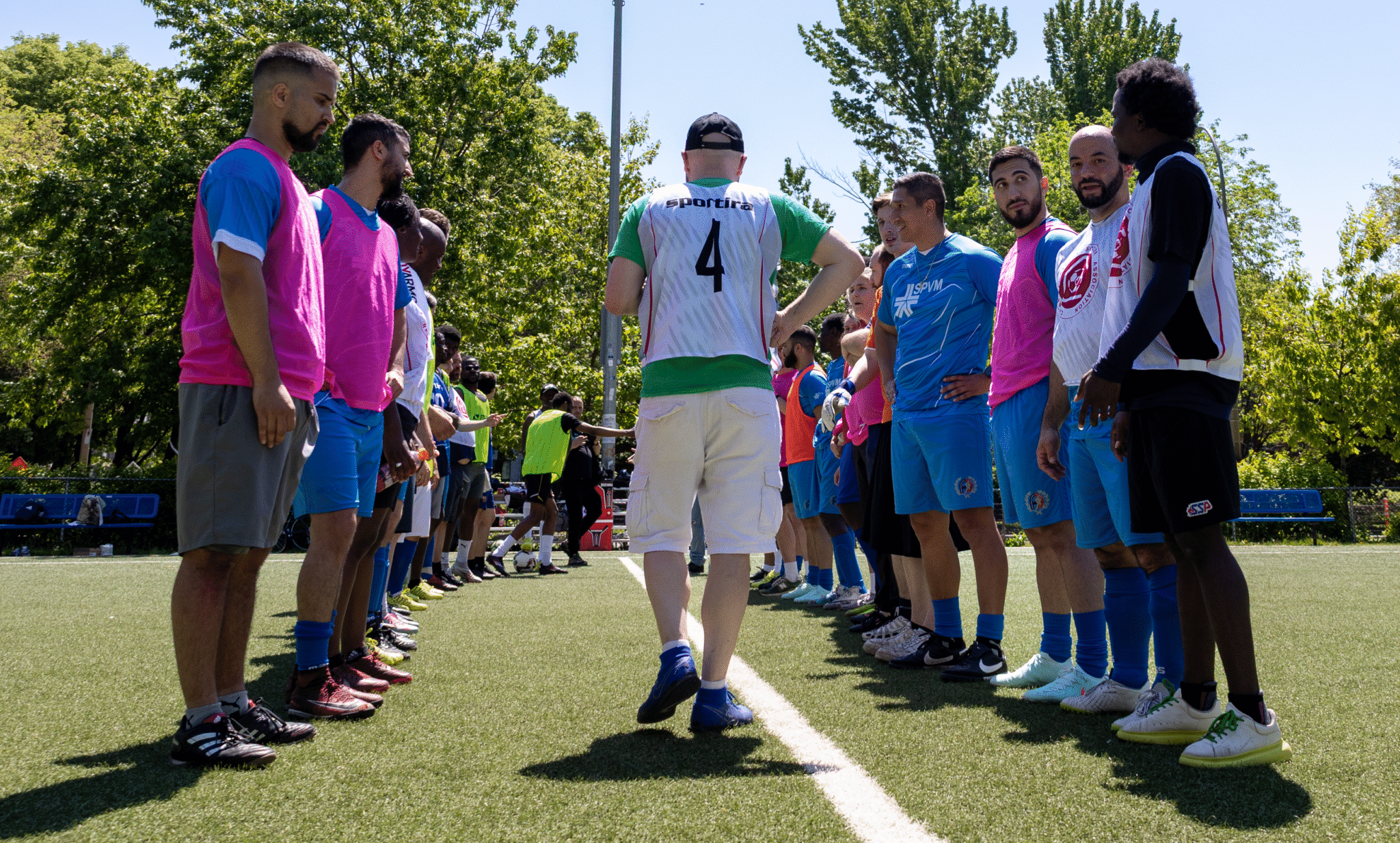
The FIFA World Cup has brought soccer to front-of-mind for many Canadians, even those who hadn’t previously paid much attention to the sport. As the most popular sport in the world, it requires little equipment and has fairly simple rules. It also creates a strong foundation for building community.
“We found the sport to be a language that we can easily use to attract people to be included, to be part of something bigger than themselves,” says Canadian Street Soccer Association (CSSA) founder and CEO, Hossam Khedr. “Instead of talking about resumes and housing and jobs, we start to talk about getting to know each other and building that trust back.”
The CSSA was established in 2024 and brings soccer sessions, tournaments, and other support programs to Canadians living with homelessness, mental health struggles, addiction or social isolation. Local programs are offered in cities across the country, including Brampton and Mississauga.
“We meet our players where they are. Our focus isn’t just on the team; it’s on each person’s journey,” he says. “Our outreach starts with a simple message: ‘Come and kick a ball.’ That simple invitation opens the door to connection and hope.”
According to Khedr, the CSSA fills an important gap between social and sports organizations. Local programs have a soccer coach who understands the sport and helps modify the games according to the needs and abilities of the players. There’s also a social coach, who creates trust between players and understands the challenges they’re experiencing.
“We saw the need in our communities for something like this,” he says. “We took knowledge and experience from other countries, and how they run things, but we tried to modify every program according to the province we’re working in.”
They also take part in the Homeless World Cup, a yearly tournament where 70+ similar organizations and their players gather to represent their countries. The 2025 tournament took place in Oslo, Norway, and the upcoming 2026 tournament, set to play in January 2027, will be in Mexico City, Mexico.
“CSSA is a bigger movement than the organization itself,” Khedr says. “During the last ten years, I have communicated and chatted and talked to managers from around the world, and learned quite a bit about the skills we need here, and how to build capacity within Canada to run a program that fits Canada.”
However, like many nonprofits and charities, the work isn’t easy. Khedr says their niche means they aren’t always taken seriously by other sport or social organizations. Resources and funding are also limited.
“The beauty of running an organization like this is there’s not any boring day, but a lot of challenges come our way,” he says. “We’re trying to raise awareness, while we also try to create opportunities for these players, so finance becomes a huge challenge for us.”
CSSA was offered grants to provide activities in Toronto during the FIFA world cup, some of which will extend for the next year or two. Still, there are many more cities, such as Winnipeg, Hamilton, London and Edmonton who have expressed interest in starting their own local programs, and don’t have the same regionally-designated funding.
“We’re reaching out to government, we’re reaching out to private foundations, we’re reaching out to community foundations, we’re reaching out to corporations for sponsorship,” Khedr says. “We were successful enough to run the program so far, but today we declined one of the locations [that wanted] to start a program, because we don’t have money for it.”
Despite their challenges, they have helped foster a sports community that is built on trust and care. Khedr recalls one of the program participants saying, “I consistently come to the program because I know that if I don’t show up one week, someone will ask about me.”
Khedr says “the main reason we’re here is to raise awareness about unhoused populations, about poverty, about people who are recovering from mental health and addiction. To give a second chance to some of our populations, our citizens, and our residents in our cities.” He also hopes to reduce the judgment that comes with homelessness. “Any of us could be in financial trouble the day after, be in a shelter, or a place, or asking a family member for help,” he said, adding that financial setbacks can leave anyone seeking help from shelters.
In Brampton, mixed sessions take place on Tuesdays from 2:30 – 3:30 p.m. at the SaveMax Sports Complex. Mississauga offers programming for women, and information can be requested by emailing mississauga@canadianstreetsoccer.ca.